Navigation
Sapa Trekking & Rice Terrace Guide: Best Routes & Times
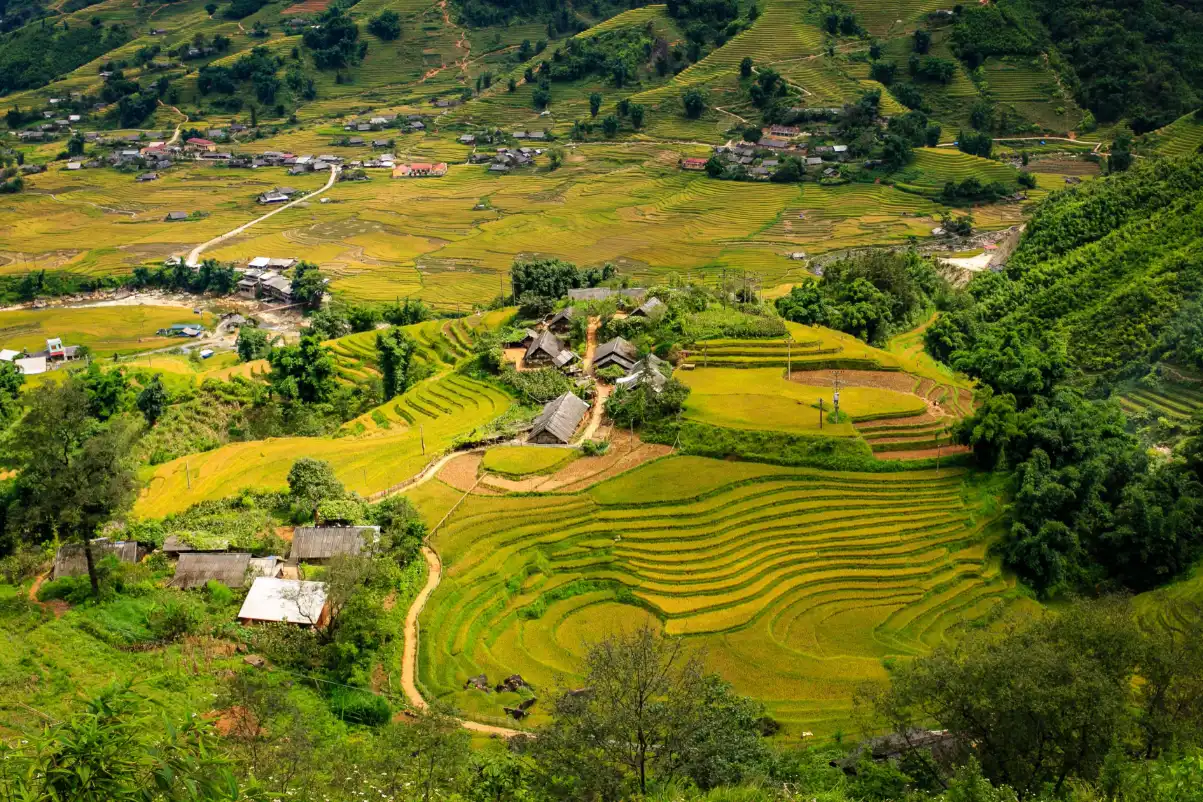

Sapa rewards travelers who give it time. With a road journey of around five to six hours from Hanoi, it is best enjoyed over several days, wandering on foot through the mountain valleys and rice terraces that have made this corner of northern Vietnam so famous.
For a first visit to Sapa Vietnam, the main decisions are simple: how many days to spend, how hard the trek should be, what the Sapa rice fields will look like when you arrive, and whether to walk independently or with a guide.
If you are still deciding whether the region deserves a place in your itinerary, compare it with Halong Bay and Ninh Binh first. If Sapa is already on your list, this guide covers everything you need to plan the trekking.
Key Highlights
- Three days and two nights is the best first visit length because the road from Hanoi takes five to six hours each way.
- Sapa rice fields in November are mostly harvested and brown, so golden terraces are best seen in September and early October.
- Fansipan is a proper mountain climb to 3,143 metres, and Hoang Lien National Park guidance requires trekkers to use a guide.
- Muong Hoa Valley through Y Linh Ho, Lao Chai and Ta Van is the classic route for Sapa rice terraces on a first visit.
How Many Days Do You Really Need for Sapa?
For most travellers, three days and two nights offers the best balance between travel time and time on the trail.
Buses and shuttle vans generally take five to six hours each way. The alternative is the overnight train to Lao Cai followed by a road transfer up to Sapa. Either way, a trip sold as "two days in Sapa" does not automatically give you two full days of trekking.
Since most trips begin in the capital, it is also worth choosing where to stay in Hanoi's Old Quarter so your pickup or train departure is easy.
2 Days / 1 Night: Possible, but Compressed
A two-day, one-night trip can work if your Vietnam itinerary is tight and you want one main trekking experience.
Travel takes a noticeable share of the time, so you will usually get one shorter activity and one longer trek rather than two full days in the mountains. It suits travellers who are happy with a structured schedule and do not mind travelling soon after the walk.
3 Days / 2 Nights: A Better First-Time Balance
Three days and two nights gives you room for a proper trekking day without stacking hours of walking on top of a long road journey. It also leaves flexibility if rain, mist or tiredness forces a change of plan.
If you are visiting mainly for the rice terraces and trekking rather than the town, this is the best starting point.
Longer Than 3 Days
Stay longer if trekking is a main reason for your northern Vietnam trip.
Extra time lets you add:
- an overnight or multi-day valley trek
- slower walking days
- accommodation outside Sapa town
- a more demanding mountain route such as Fansipan
If you only want one classic rice terrace trek, you probably do not need more than three days.
What Kind of Sapa Trekking Tour Should You Choose?
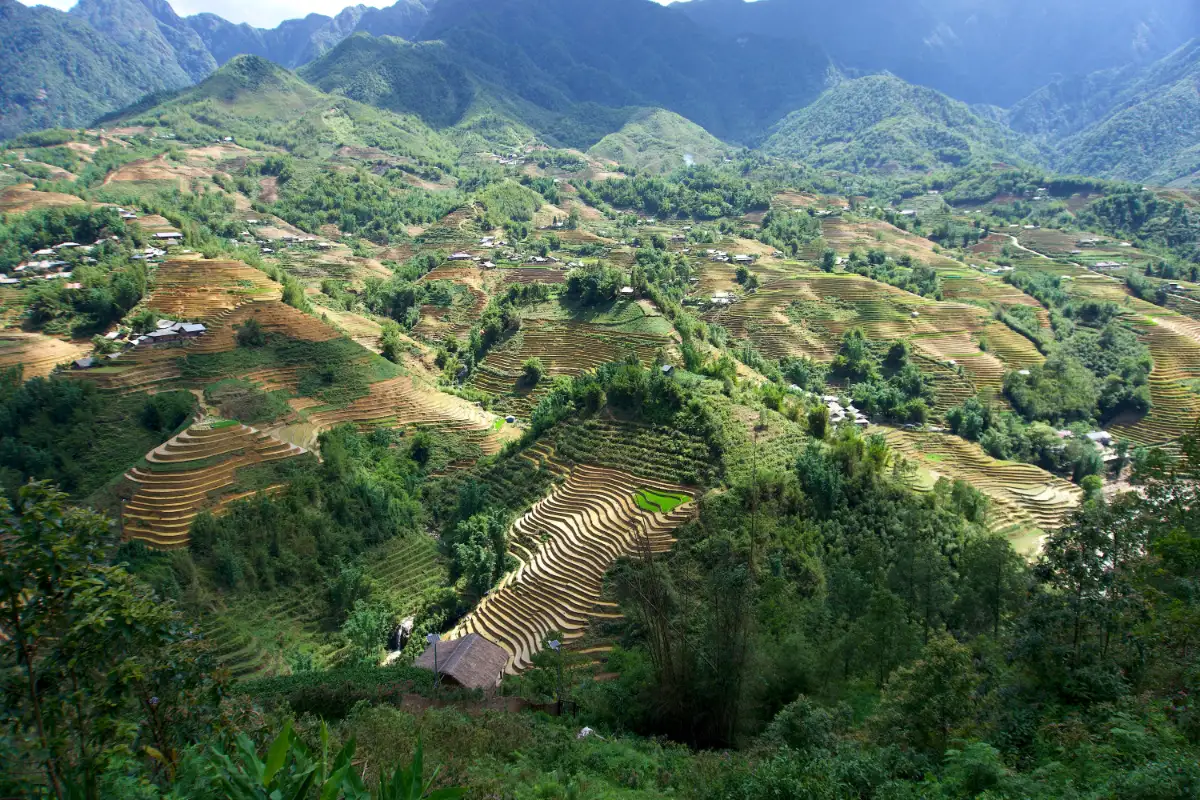
You do not need to research every village before choosing. Decide how long you want to walk and how difficult you want it to be, then pick a route that fits. Vietnam trekking around Sapa ranges from a gentle morning stroll to a multi-day mountain climb.
1. Short and Easier Walks
If you have limited time, a shorter walk around places such as Cat Cat gives a good introduction to the landscape.
Cat Cat is close to town and generally considered one of the easier options, but it is also one of the most developed and busiest village routes, so do not expect a remote countryside trek.
"Easy" also does not mean flat: Sapa has plenty of slopes, steps and uphill sections.
A shorter walk suits you if you:
- have only part of a day available
- are travelling with someone who may struggle on a long trek
- want an easy introduction before a longer walk
2. The Classic Full-Day Rice Terrace Trek
For active first-time visitors, Muong Hoa Valley is one of the most popular trekking areas in Sapa.
A common route passes through Y Linh Ho, Lao Chai and Ta Van, following the valley through terraces, farmland and villages. Walking time and distance vary with the start point, finish point and whether vehicle transfers are used, so always confirm the details.
This is the walk most people picture when they imagine Sapa trekking and rice terraces. It suits anyone comfortable walking for much of the day who does not want a difficult mountain hike. It is popular, so expect to share parts of the trail with other groups.
3. Overnight or Multi-Day Valley Trekking
Choose an overnight trek if walking is the main reason you came. Instead of returning to town after day one, you continue deeper into the valley, sleep in a village and walk again the next morning. The countryside becomes the heart of the trip rather than a single excursion.
Plan carefully, though. Think about how many hours you will walk each day, what luggage you will carry, the standard of the accommodation, and how day two may change if the weather turns.
If one full day on foot is enough, returning to a comfortable hotel in Sapa may suit you better.
4. Fansipan Trekking
Fansipan is a different kind of trek. Valley walks follow farmland, village roads and paths between settlements, while a Fansipan trek climbs through Hoang Lien National Park toward Vietnam's highest peak at 3,143 metres.
The national park manages several routes. The commonly used Tram Ton route can be done in one day or as a two-day, one-night trek, and other routes are longer and harder.
Current park guidance says trekkers must use a guide, but access rules can change, so confirm the latest requirements before you plan the climb.
For most first-time visitors, Fansipan is worth considering only if reaching the summit on foot is a main goal of the trip.
Sapa Trekking & Rice Terrace Cost
The cost of a Sapa trekking tour depends mostly on trip length, accommodation type, group size and whether the tour includes transport from Hanoi.
Based on prices listed on tour marketplaces in late 2026, typical starting prices per person look like this:
|
Trip type |
Typical starting price (per person) |
|---|---|
|
2 days / 1 night with homestay |
About US$95 to US$130 |
|
3 days / 2 nights valley trek |
About US$110 to US$350 |
|
3 to 4 days with Fansipan |
About US$300 to US$515 |
Treat these as guide figures only. Prices change with season, room type (shared or private), group size and whether the quote is for a private or joint tour.
When comparing Sapa trekking and rice terrace tours, check what the price actually covers:
- return transport from Hanoi, such as a sleeper bus or shuttle
- a local trekking guide
- meals, including the homestay dinner
- accommodation and room type
- entrance or village fees
- extra costs such as Fansipan permits, cable car or drinks
A cheaper tour is not automatically better value. Compare the walking hours, group size and inclusions rather than the headline number alone. Always confirm the current price with the operator before booking.
When Will Sapa's Rice Terraces Look Their Best?
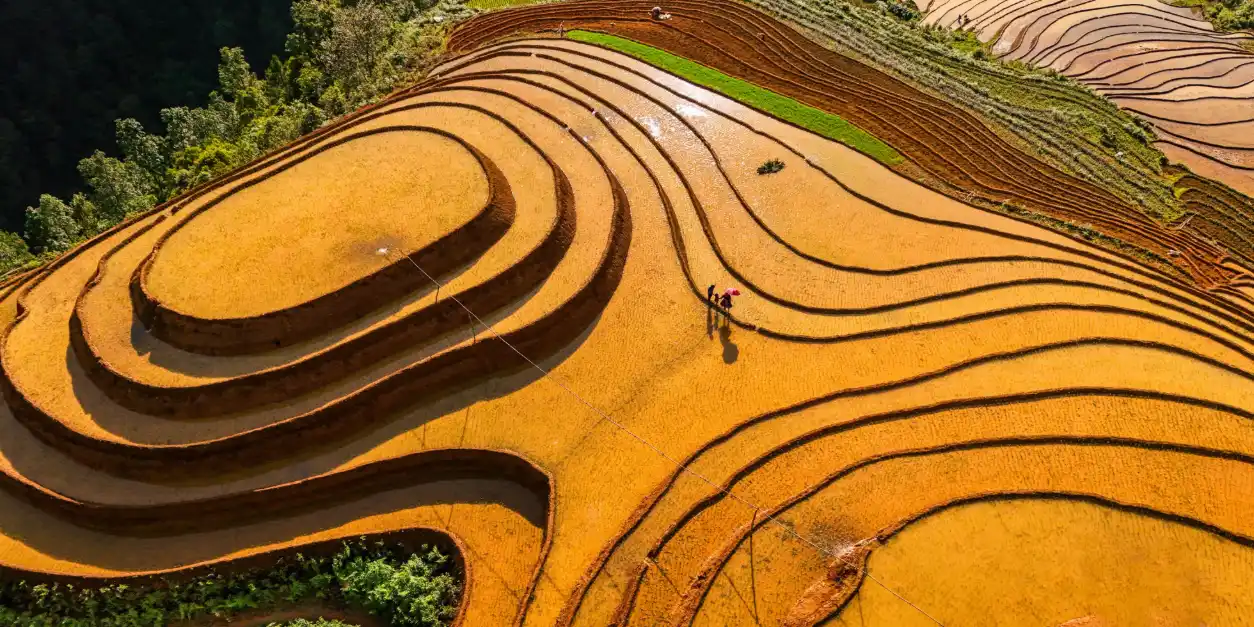
No single week guarantees perfect terraces.
These are working fields, and their appearance depends on planting, rainfall, elevation and harvest timing, so neighbouring valleys can be at slightly different stages.
|
Period |
What you may see |
|---|---|
|
Late spring |
Water-filled terraces and planting activity |
|
Early summer |
Fresh young rice and increasingly green fields |
|
Mid-summer |
Lush, deeper green terraces |
|
Late summer to early autumn |
Rice ripening and turning golden |
|
Late autumn |
Harvest underway, with cut fields and drying straw |
|
After harvest |
Cut or brown fields rather than the green or golden scenery in photos |
Sapa Tourism Office describes April and May as the time when fields are prepared and filled for the new crop, with greener conditions developing through June and July. Other local tourism guidance places the main water-filled period around May to early June.
Golden rice usually appears later, with local sources generally placing the change from green to yellow between late August and September.
Think in seasonal ranges rather than exact dates, and do not trust claims that one particular week will guarantee golden fields. Conditions also shift across the country, so the best time to visit Vietnam depends on which region you are heading to.
Sapa Rice Fields in November
By November, most Sapa rice fields have been harvested. Instead of green or gold terraces, expect cut stubble, brown and earthy slopes, and sometimes drying straw in the villages. The weather is also cooler and often misty, so views across the valley can be hidden for part of the day.
That does not make November a poor month for everyone. Trails are quieter, the mountain atmosphere is dramatic, and trekking is still very possible with warm layers and rain protection. But if photographing golden terraces is your main goal, aim for September or early October instead.
The same applies to a Sapa rice fields visit in other off seasons: the scenery is different from promotional photos, not absent.
How Weather Changes the Trek, Not Just the View
The forecast affects how hard a trek feels, not only how clear the views are.
Rain and Mud
Many valley routes mix paved roads, dirt tracks, steps and narrow paths beside farmland.
After rain, exposed soil and clay become slippery, and a route that feels manageable when dry can take much longer.
On long downhill sections, slippery mud is often a bigger challenge than altitude. If heavy rain is forecast, ask whether the route can be shortened or moved to firmer paths.
Mist and Visibility
Mist is common in Sapa's mountain climate.
It can soften or completely hide the terraces and surrounding peaks. You can still trek, but if wide mountain views matter most to you, poor visibility will affect your experience more than it would for someone mainly interested in walking.
Heat, Humidity and Cold
Summer brings greener fields but also warmer, wetter and more humid conditions.
Winter is much cooler and can be misty, and the colder period generally runs from around November through March, so clothes that feel fine in Hanoi may not be warm enough here.
For a normal valley trek, basic preparation matters more than specialist gear:
- wear shoes with good grip
- carry rain protection if showers are possible
- bring layers in cooler months
- carry drinking water
- check the latest forecast before you leave
Do not judge a route only by an "easy" or "moderate" label. Weather and trail conditions can make the same trek feel very different from day to day.
Should You Trek With a Guide or Independently?
A guide is not necessary for every walk.
Places such as Cat Cat and Ta Phin can be visited independently, and short, established walks work well if you are comfortable navigating and conditions are good.
Guided trekking becomes more valuable as the route gets longer or more complicated.
Independent Walking Can Work If:
- the route is short and well established
- you know where you start and finish
- weather and visibility are good
- you are comfortable navigating unfamiliar rural paths
- you do not need transport or accommodation arranged along the way
A Guide Is More Useful If:
- you are doing a full-day or multi-day route
- the trail has several possible branches
- recent rain may require route changes
- you may need to adjust the trek to your fitness
- transport is needed at the end of the walk
- meals or overnight accommodation are included
A good guide does more than point the way. They adjust the route to conditions, handle logistics and give context about the places and communities you pass.
When joining a guided trek, find out how local guides and communities are involved in the tour. Fansipan is the exception: current Hoang Lien National Park guidance requires a guide.
Sapa Town Hotel or Valley Homestay?
A homestay is not essential for a worthwhile trek, and staying in town may be unnecessary if most of your time is spent farther down the valley.
Stay in Sapa town if you have only one or two nights, are doing one main day trek, want easy access to restaurants and transport, or prefer hotel-style comfort after walking. For a short first visit, this is usually the easier choice.
Stay in the valley if you are doing an overnight or multi-day trek, want to keep walking the next morning, or care more about time in the countryside than convenience.
Before booking, ask what "homestay" means for that property. Some are basic and communal, while others work more like small guesthouses with private rooms and better facilities. If privacy, bathrooms or sleeping comfort matter, confirm those details in advance.
What to Check Before Booking a Sapa Trekking Tour
A route name alone does not tell you what you are booking.
Two tours may both include Lao Chai and Ta Van but involve very different amounts of walking.
Before you book, find out:
- How many hours will you actually walk, and what is the approximate distance?
- How much uphill and downhill is involved, and how much is on dirt trails rather than paved roads?
- Where does the walk start and finish, and are vehicle transfers used?
- Can the route be shortened if someone gets tired?
- What happens if heavy rain makes the planned trail unsuitable?
- Is the trek private or shared with other travellers?
- If accommodation is included, what does the homestay actually provide?
- Which meals, entrance fees, transport and guiding are included in the price?
These questions matter most for families, older travellers and first-time trekkers. A tour labelled "easy" can still involve several hours of walking, so ask about real walking time and whether vehicle pickup is possible instead of relying on the difficulty label.
How to Plan a Sapa Trek That Fits Your Trip
For most first-time visitors, Sapa works best when you allow time for one proper valley trek rather than fitting the area around transport from Hanoi. Three days and two nights is the easiest balance, while two days and one night can still work on a tight schedule.
Choose your route by actual walking time, terrain and current trail conditions, and treat rice terrace timing as a seasonal guide rather than a promise. Before you travel, check the latest Vietnam visa and travel requirements so entry rules do not catch you out.
Sapa also pairs well with other northern highlights. You could follow the mountains with a Halong Bay cruise, a quieter trip to Bai Tu Long Bay, or a few days of Hanoi food tours before you head home.
If you would rather not arrange transport and trekking separately, Advensa Travel offers Hanoi and Northern Vietnam trip packages that include Sapa alongside Hanoi, Halong Bay and Ninh Binh.
Conclusion
Sapa trekking works best when you give yourself three days and two nights, choose a route that matches your fitness, and treat the journey from Hanoi as part of the plan.
The best Sapa rice terraces appear from September to early October, while Sapa rice fields in November are usually harvested. Weather, mud and mist can change how any trek feels.
Compare guided and independent options, check what your Sapa trekking tour includes, and confirm the latest Fansipan rules before booking. That keeps your Vietnam trekking trip realistic and rewarding.
Frequently Asked Questions
How difficult is trekking in Sapa?
Most valley treks around Sapa are easy to moderate, with several hours of walking over slopes, steps and sometimes muddy paths rather than technical climbing. Fansipan is a much harder mountain trek and requires a guide.
Which month is best to go to Sapa?
September is usually best for golden rice terraces, while May to early June suits water-filled fields and June to July brings lush green views. Autumn also tends to offer clearer weather, though mountain conditions can change quickly.
What is Sapa famous for in Vietnam?
Sapa is famous for its terraced rice fields, mountain scenery and trekking through villages home to ethnic minority communities such as the Hmong and Red Dao. It is also known for Fansipan, Vietnam's highest peak at 3,143 metres.
Which is better, Sapa or Bana Hills?
Sapa is better for trekking, rice terraces and countryside culture, while Ba Na Hills suits travellers who want cable cars, theme park attractions and the Golden Bridge. Choose Sapa for hiking and scenery, or Ba Na Hills for an easy, attraction-filled day trip from Da Nang.